
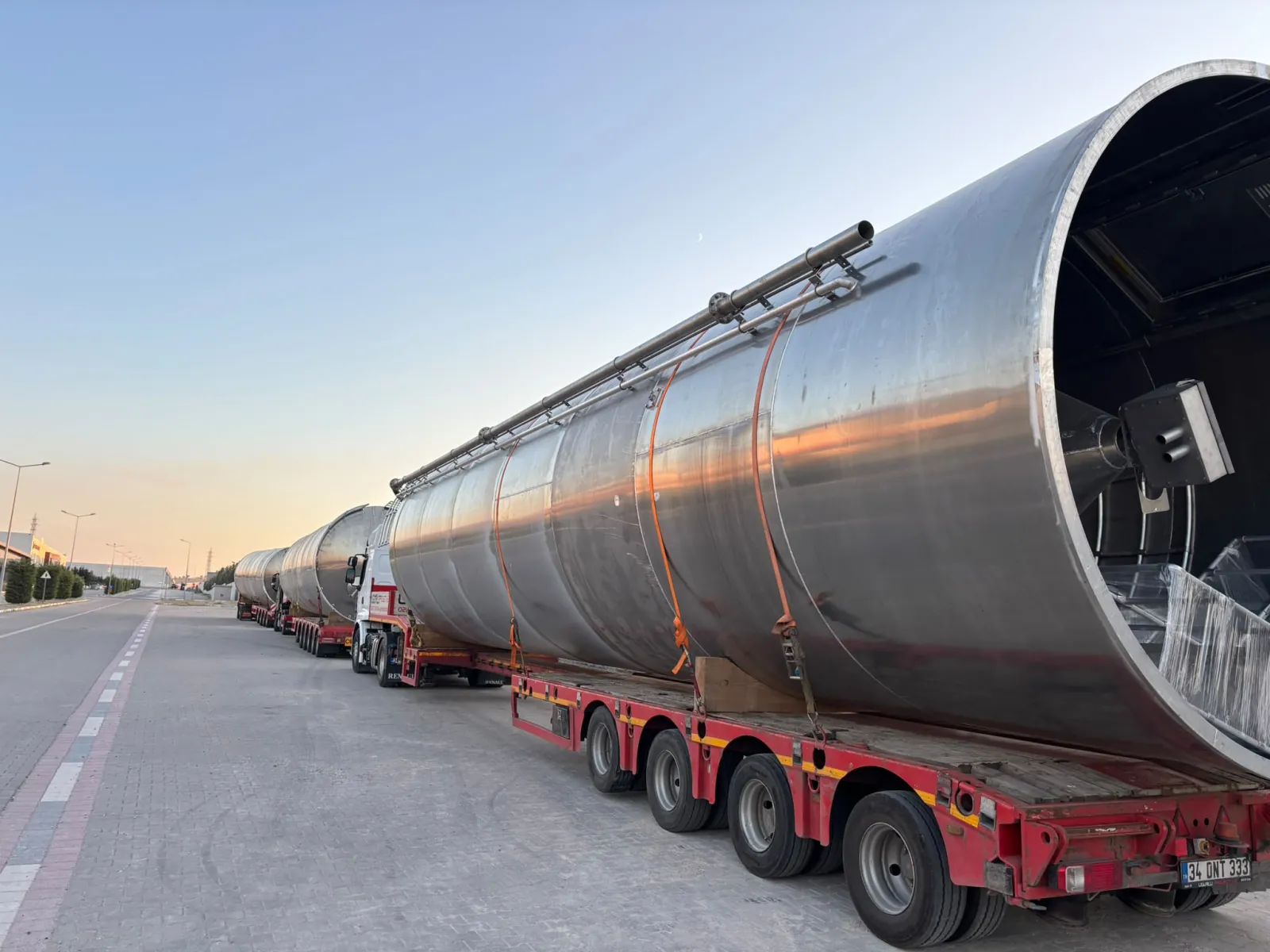
Expanding a plant's storage capacity is not simply a matter of building more silos. A new battery has to rise next to a running production line — without stopping it — and it has to speak the same language as the system already in place. Following the commissioning of the first phase, we have now completed the second phase planned for the same plant: a six-vessel stainless steel silo battery was manufactured, moved to site as an oversize convoy, installed, and connected to the raw-material conveying line.
Why a Stainless Steel Silo?
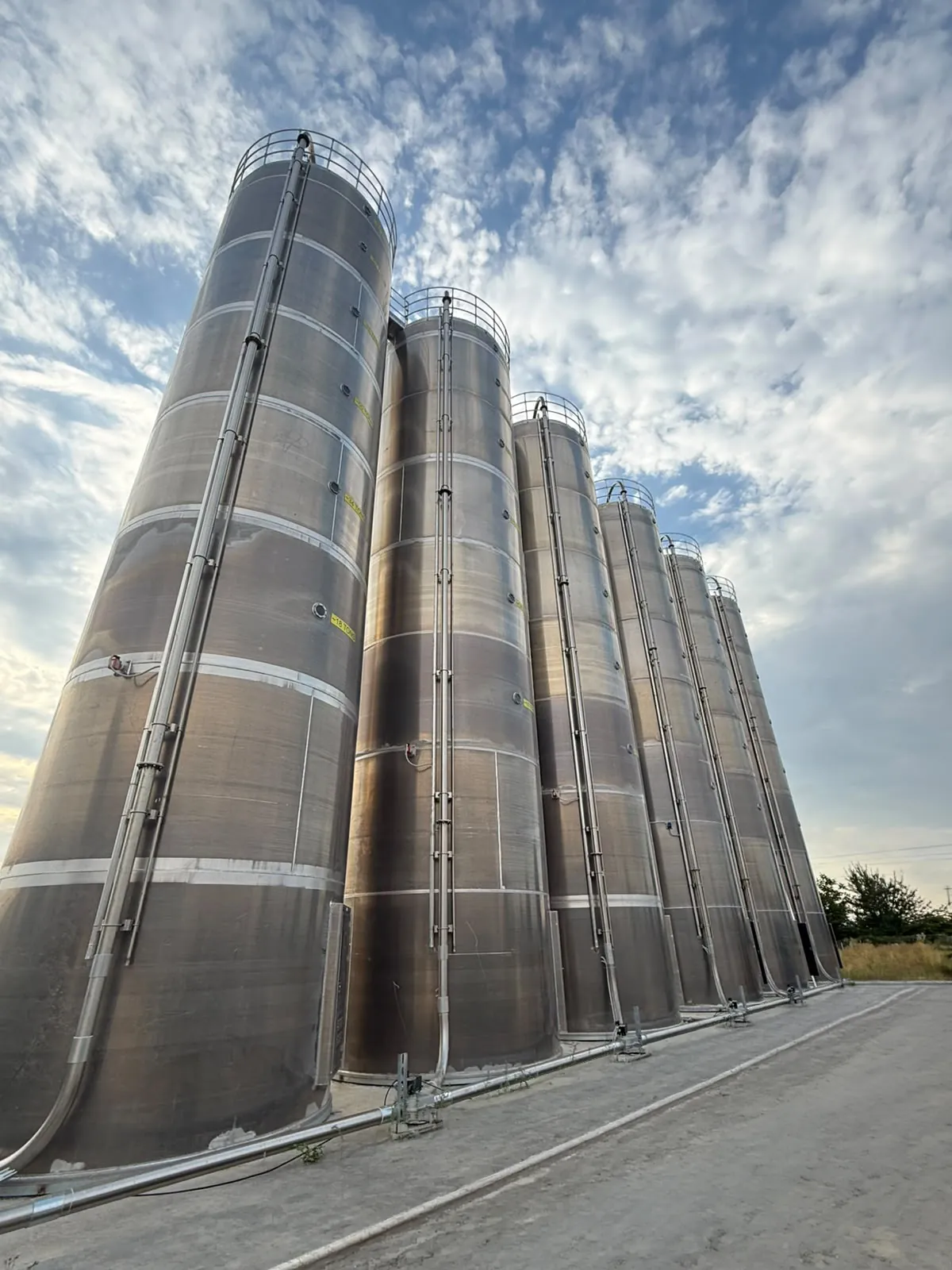
In raw-material storage, the choice of material directly determines both the service life of the system and the quality of the product:
- Corrosion resistance. A stainless shell withstands outdoor conditions and moisture without depending on paint, and needs no recoating maintenance.
- Product purity. With no flaking, rust or coating loss on the internal surface, the risk of foreign matter entering the raw material is reduced to a minimum.
- Long service life. The shell keeps its original surface integrity for years, so it stops being a maintenance item for the plant.
- Cleanability. Because the internal surface stays smooth, cleaning and changeover times between products are shorter.
- Visual integrity. No fading or rust staining develops across the plant site over the years.
Phase Two: Building Alongside a Running Plant
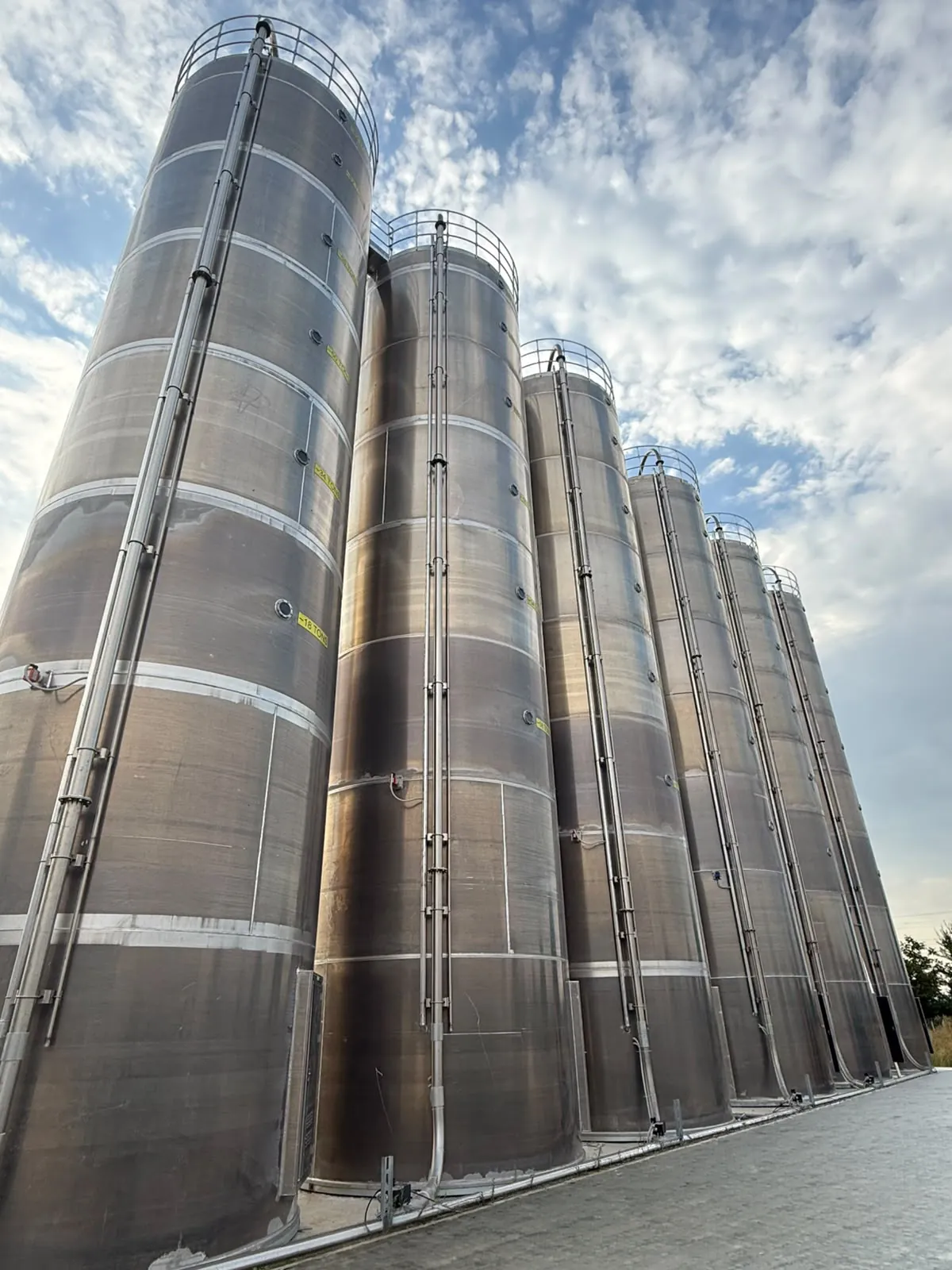
The key difference between a second phase and a first is that it does not start from a blank sheet. The new battery must match the existing foundation axis, the existing conveying-line elevations and the automation already in service. For that reason the installed system is surveyed on site before manufacturing begins, and the connection points of the new vessels are fixed accordingly.
Each vessel was produced together with its external ladder and top platform guardrail so that inspection and maintenance access is available from day one. Level-measurement and venting connections on top of the silo were also positioned during manufacturing — no drilling or after-the-fact welding was left for the site.
Oversize Transport: From Factory to Site
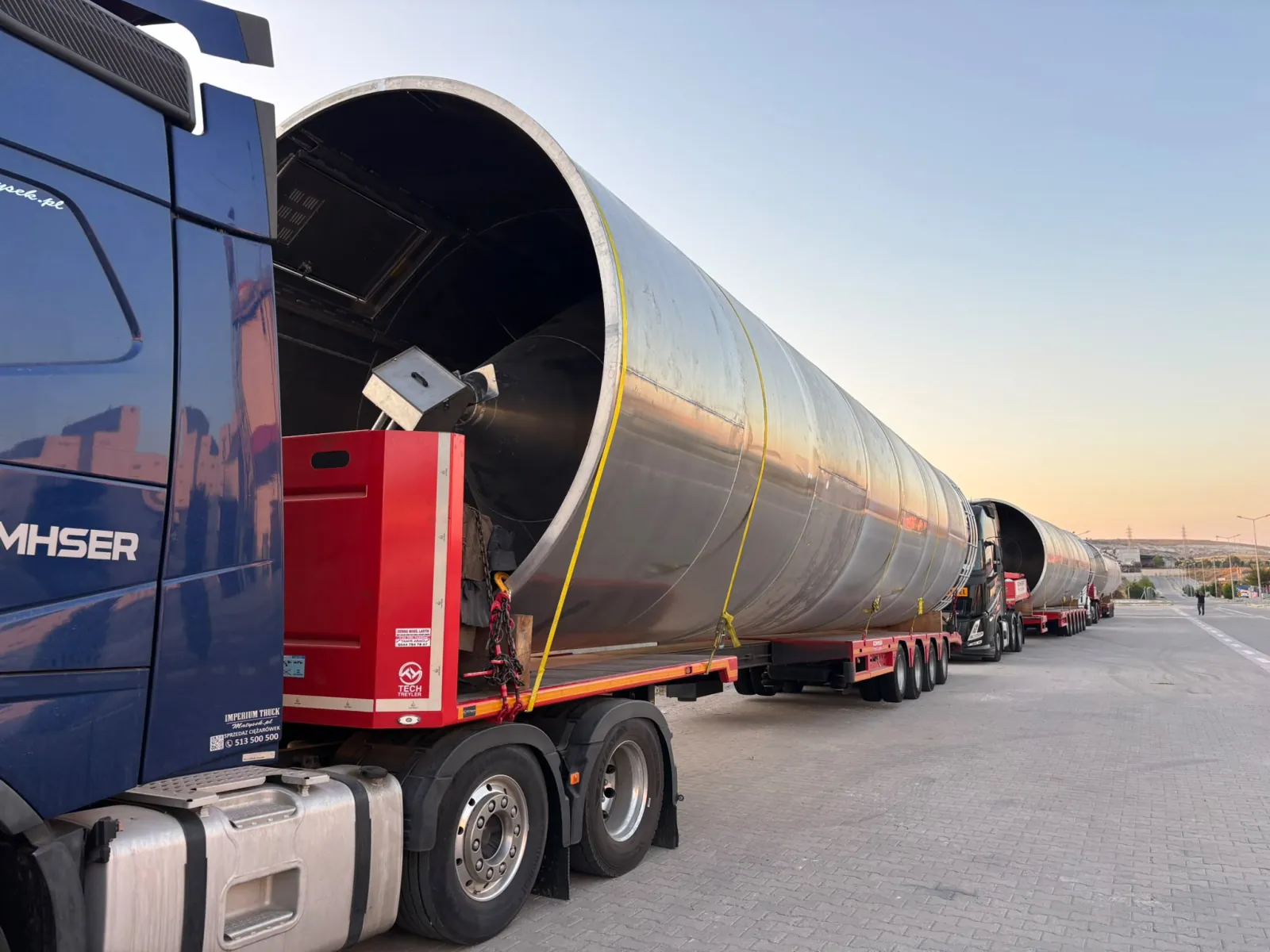
At this scale, transport is an engineering task in its own right. The shells do not fit on a standard trailer; each piece travels on its own lowbed vehicle, and the convoy moves as an oversize transport along a permitted route.
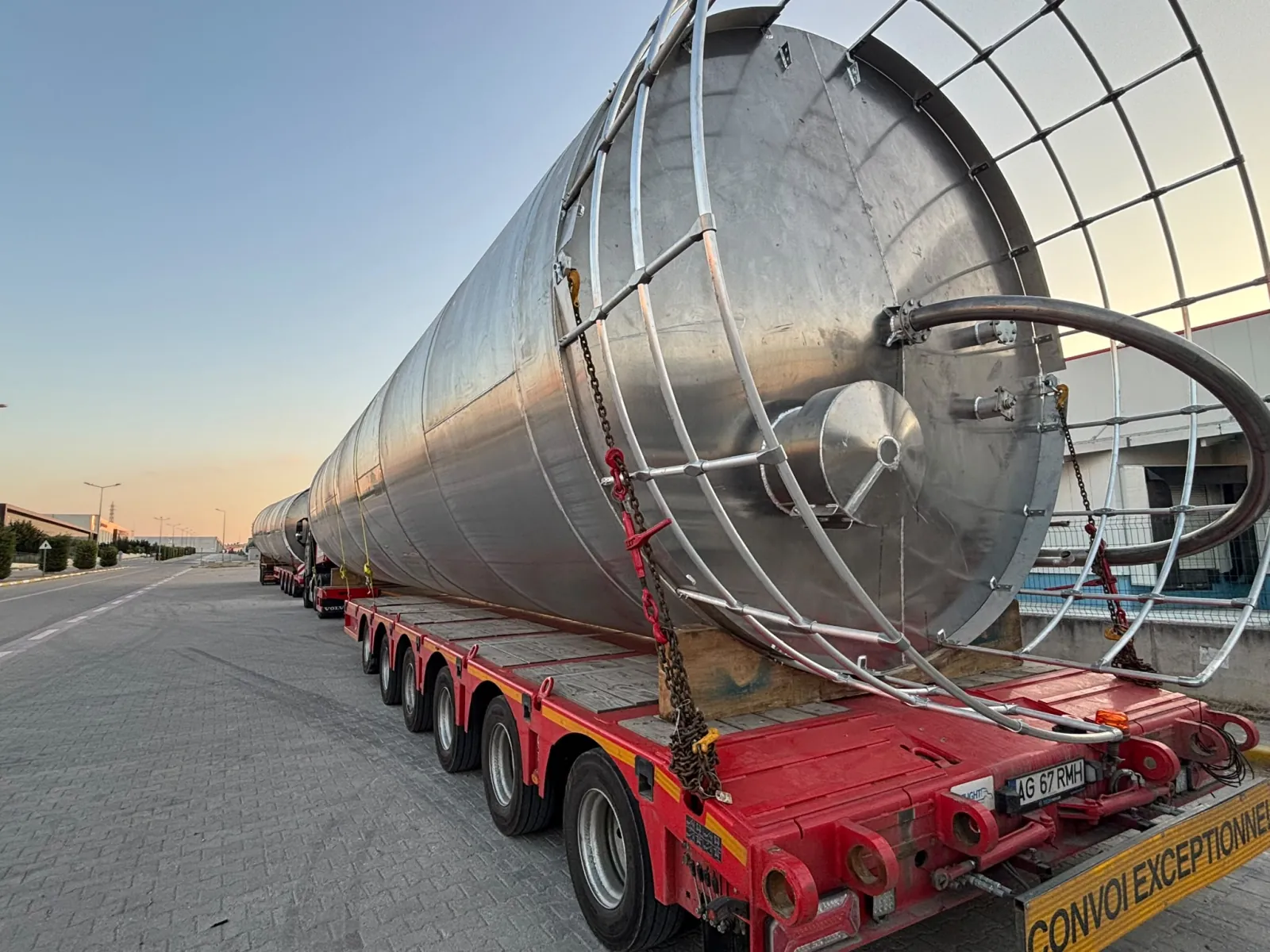
What matters during loading:
- Surface protection. The stainless surface is secured with timber blocks and padded lashings so it is not damaged at the tie-down points; chains never bear directly against the shell.
- Cone and opening protection. The conical section and flanged openings are framed with a protective cage so they take no impact in transit.
- Load distribution. A long, empty shell causes trouble through its length rather than its weight; the load axis is balanced on the trailer before departure.
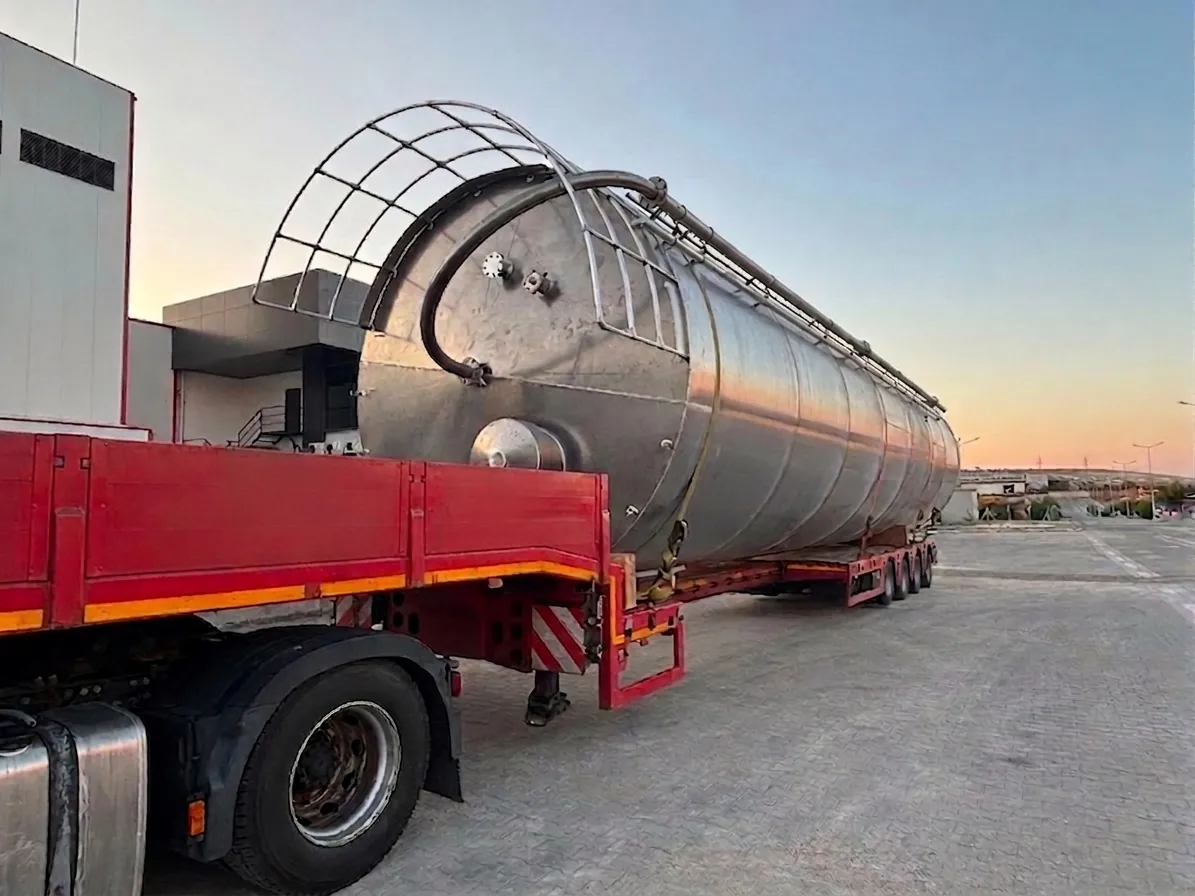
The parts reached the site in the order required for installation, so the crane could begin lifting straight away instead of waiting on site.
On-Site Installation
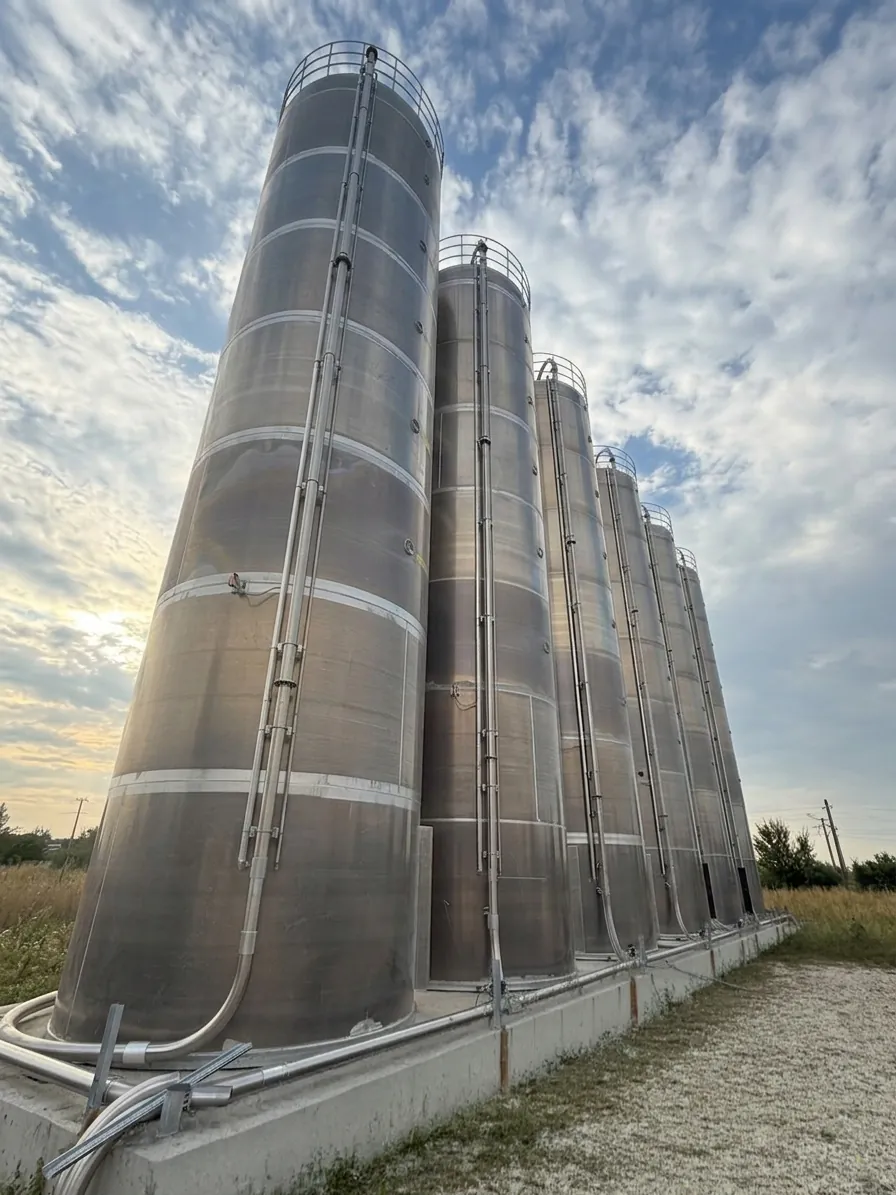
Installation begins with seating the vessels on the concrete foundation and aligning them vertically. At this stage even a few millimetres of deviation turns into stress on the conveying-line connections once the silos are full, which is why alignment is verified vessel by vessel before any connection is made.
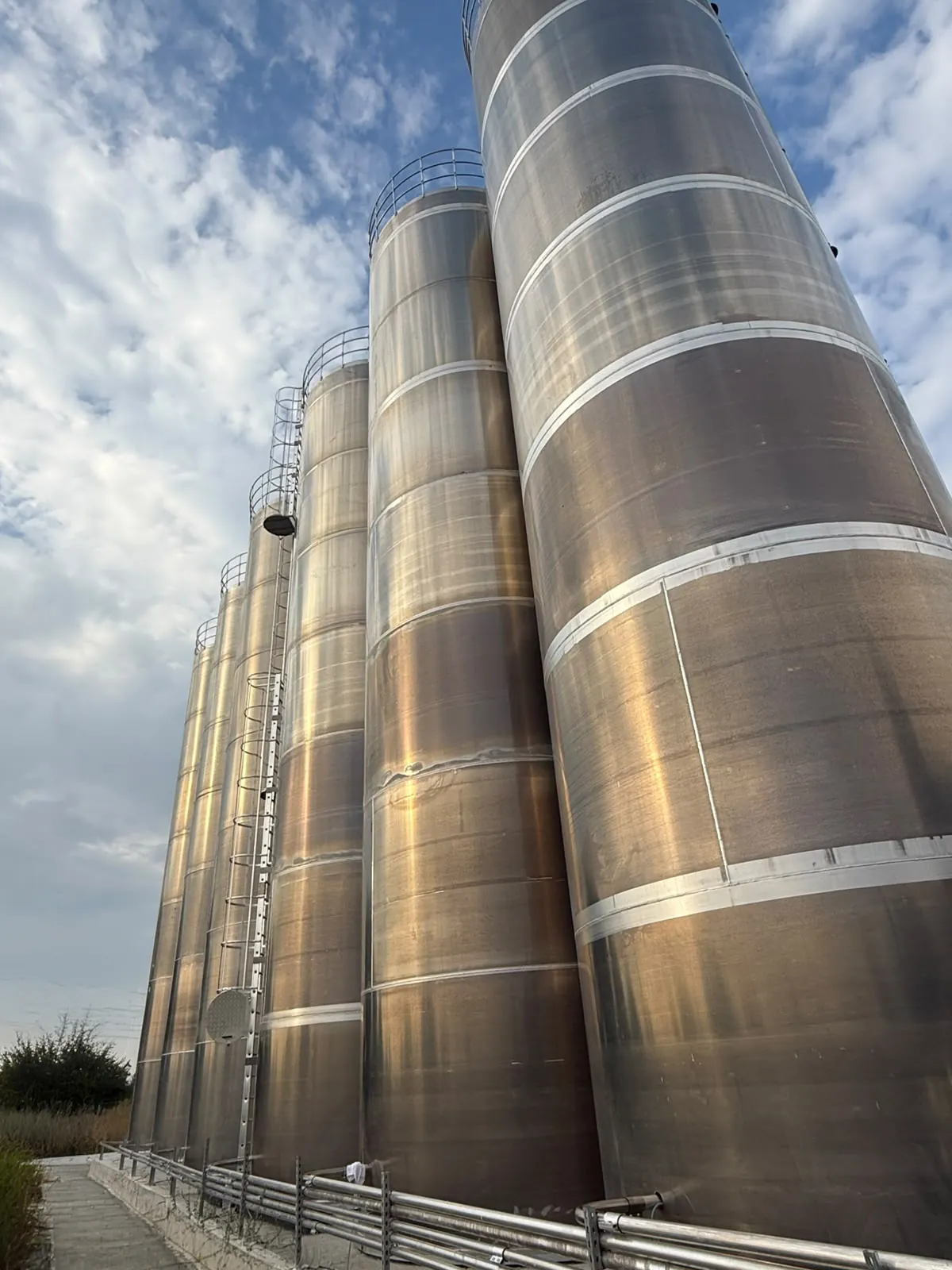
Once the vessels are in place, the access ladders, service platforms and top guardrails are fitted. This equipment is not merely a requirement — it is the condition on which the operator can safely inspect the silo for years to come.
Conveying Line and Infrastructure
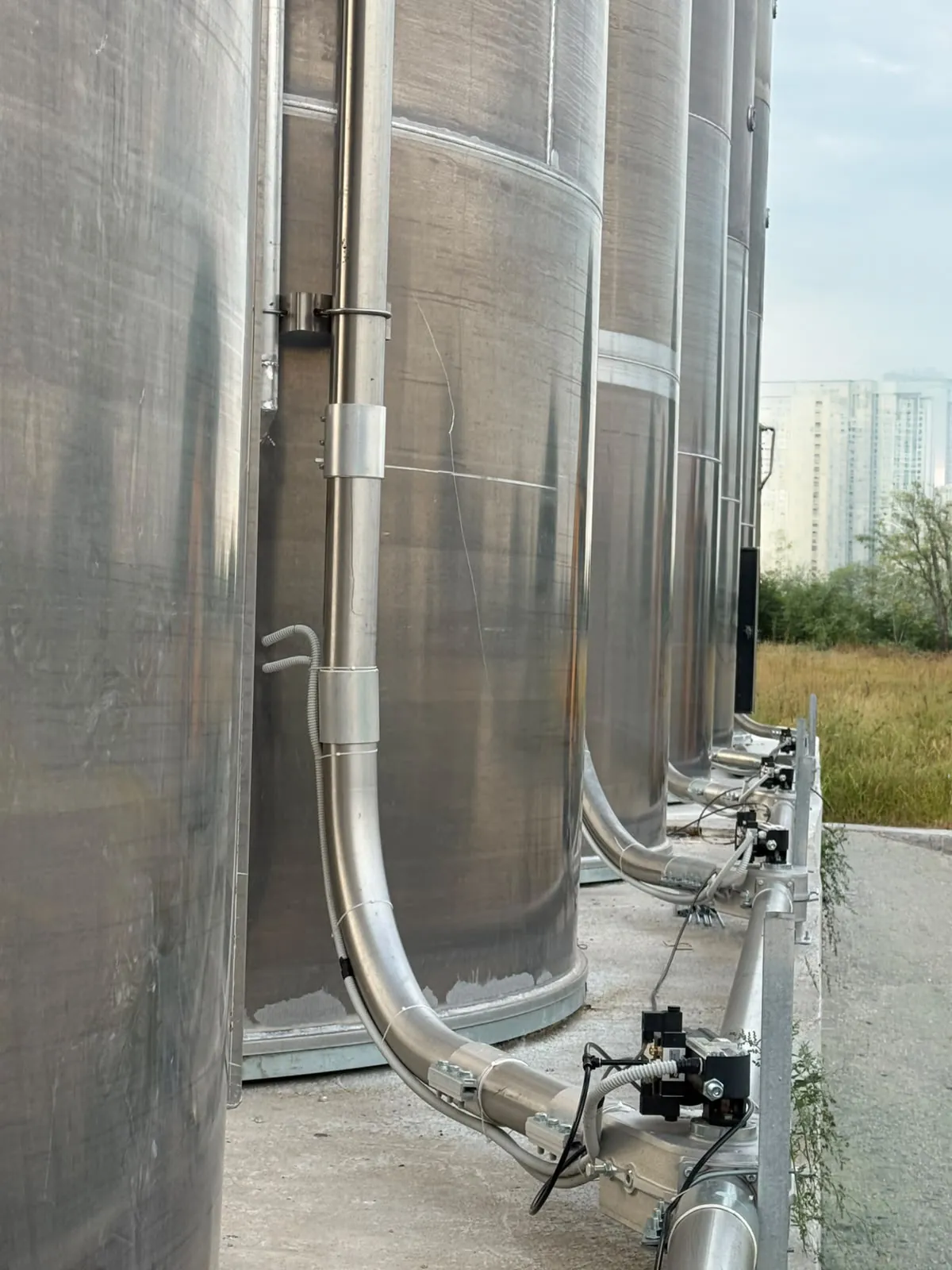
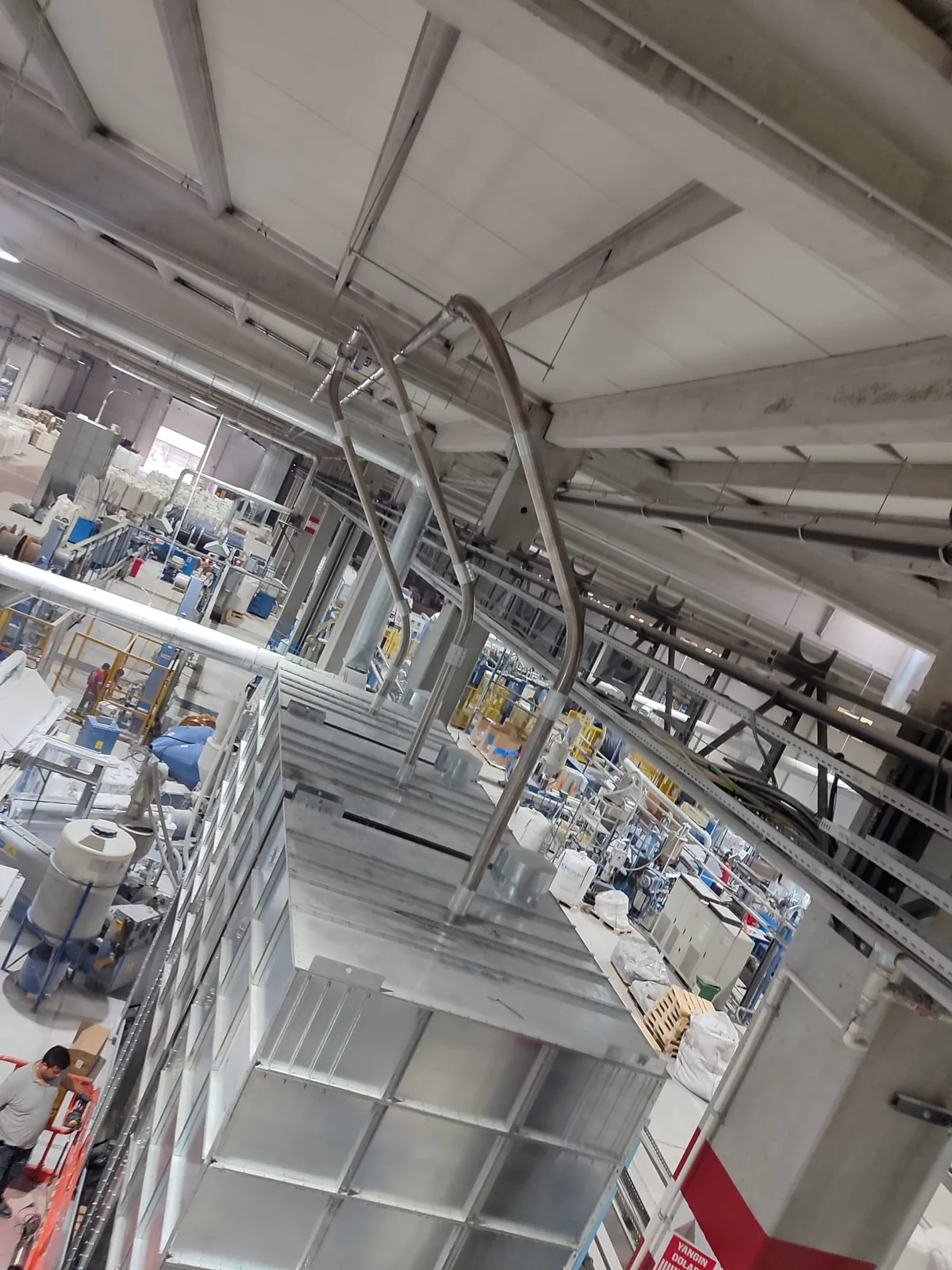
A silo is not a stand-alone store; it is part of the central raw-material feeding system. The outlet beneath each vessel is tied into the conveying line with long-radius bends. The reason for the long radius is straightforward: tight turns break the granules, wear the line and increase dust generation over time.
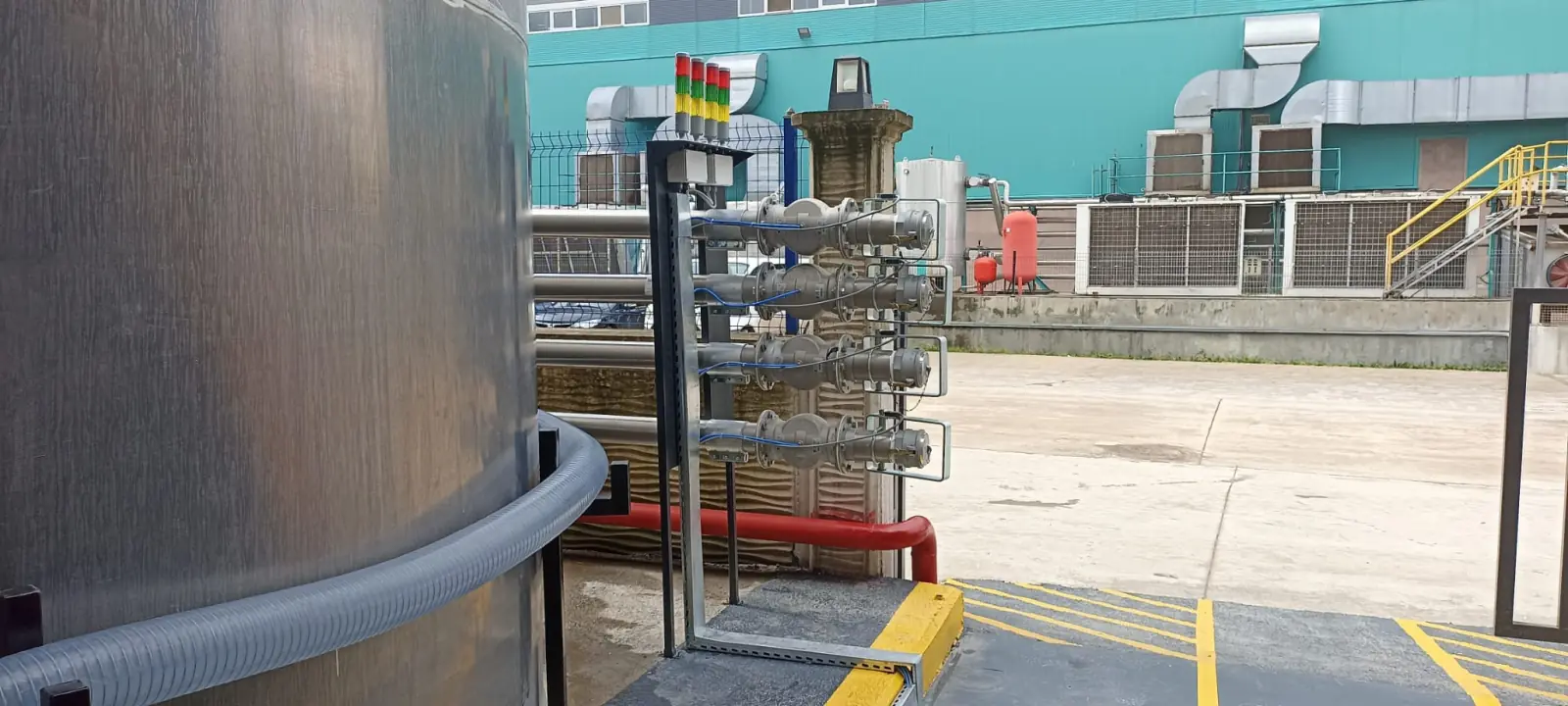
The diverter valves along the line determine, through the automation, which silo feeds which line — so the operator never has to change lines by hand on site.
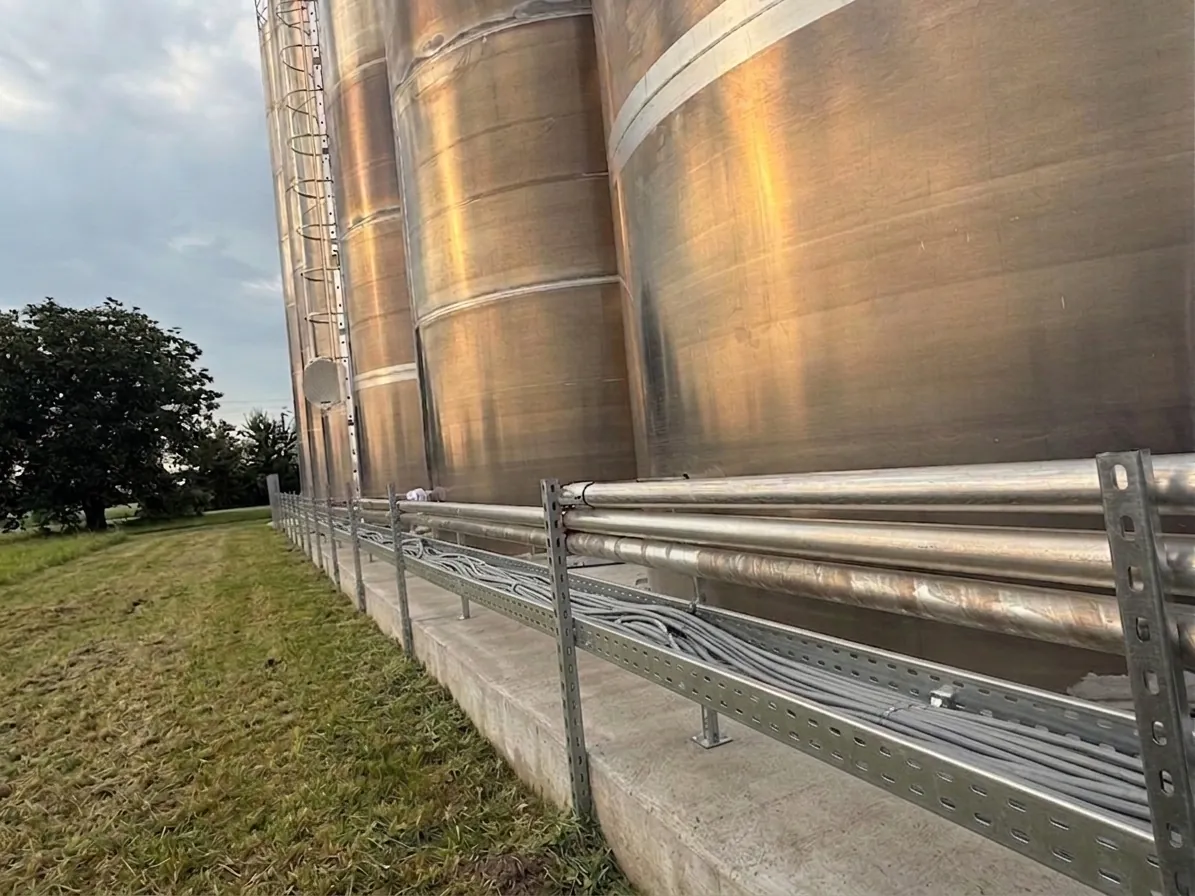
Running parallel to the pipework, the cable tray carries the connections for the level sensors and valve actuators. Gathering signal and power cabling in a tidy tray along the same route as the pipeline makes future maintenance and fault tracing something an engineer can follow by eye on site.
Outcome
With the second phase complete, the plant now has an expanded storage capacity managed under a single automation system and fed from a single centre. From manufacturing through to site installation and commissioning, we continue to deliver every step of stainless steel silo systems, under-silo conveying lines and central raw-material feeding solutions from a single source.